

Showing posts with label staff. Show all posts
Showing posts with label staff. Show all posts
Thursday, March 10, 2016
Spring Break!
Just a quick reminder all Chandler-Gilbert Community College campuses will be closed for Spring Break next week March 14-18. Classes will resume as normal on Monday, March 21. Enjoy your time off and see you soon!


Thursday, October 29, 2015
CGCC Educator and Staff of the Year Selected for 2015 Gilbert Excellence Awards
Dr. Jenny Pauls and Kim DeHaan were selected as Chandler-Gilbert Community College (CGCC) Educator of the Year and CGCC Staff Employee of the Year for the 2015 Gilbert Community Excellence Awards. The awards will be presented during an awards ceremony on Friday, November 13 at the DoubleTree by Hilton San Tan Elegante Conference and Reception Center in Gilbert.
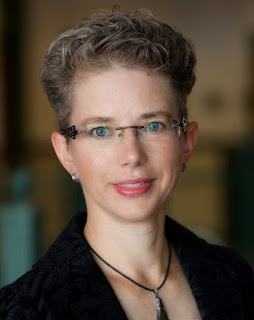 Dr. Jenny Pauls, CGCC Educator of the Year
Dr. Jenny Pauls is the head of the Physics Department at Chandler-Gilbert Community College's (CGCC) Pecos Campus. For over 10 years, Dr. Pauls has taught university physics, one of the most rigorous course sequences in the college, with high academic standards and dedication to her students. In fact, students line up to take her class! She is a physicist who makes physics come to life in her classroom by promoting curiosity, critical thinking and thorough classroom discussions. She fosters a culture in her classes which allows students to take risks and try different approaches to an experiment, idea, or problem. Her students love her passion for physics and teaching style.
Dr. Pauls is also an important member of the CGCC faculty and staff. She mentors new physics residential and adjunct faculty and currently serves as the senator for the Physical Sciences and Engineering Division to the Faculty Senate at CGCC. In addition, she is a faculty advisor to the Engineering Club on campus and a Co-Principal Investigator and Mentor for the High-Tech Transfer Program Scholars Grant from the National Science Foundation. Dr. Pauls works closely with leading businesses in the community, such as the Intel Corporation, to establish partnership opportunities for students to promote higher learning in every area of science. Dr. Pauls’ display of leadership on campus has created a quality experience for all students taking physics at CGCC.
 Kim DeHaan, Employee of the Year
Kim DeHaan was the Manager of College Cashier Services at Chandler-Gilbert Community College's (CGCC) Williams Campus. Kim began her career with Maricopa County Community College District (MCCCD) in 1988, and was one of a handful of employees hired in 1995 when the Williams Campus was established. After 27 years of service to the district, Kim retired on September 30, 2015.
Kim has a comprehensive background in Business Services. As Manager of College Cashier Services, her number one priority was to maintain the fiscal integrity and reputation of the college. Kim was responsible for processing the requisitions and purchase orders for CGCC campuses as well as ensure the college was in compliance with the state, federal and MCCCD district guidelines.
Kim is a natural team leader and empowered many people in the CGCC community, especially students, through her vast knowledge about the college and passion about her job. She built many valuable relationships with key partners within the Town of Queen Creek and Mesa while maintaining working relationships with Arizona State University, Williams Gateway Airport Authority and Mesa Community College to name a few. She consistently volunteered at many of the campus and community events.
Kim will always be a valued member of the CGCC community. She was an instrumental employee since day one and will continue to be an integral part of the college’s success.
Photos by Elaine Kessler of Elaine Kessler Photography

Dr. Jenny Pauls is the head of the Physics Department at Chandler-Gilbert Community College's (CGCC) Pecos Campus. For over 10 years, Dr. Pauls has taught university physics, one of the most rigorous course sequences in the college, with high academic standards and dedication to her students. In fact, students line up to take her class! She is a physicist who makes physics come to life in her classroom by promoting curiosity, critical thinking and thorough classroom discussions. She fosters a culture in her classes which allows students to take risks and try different approaches to an experiment, idea, or problem. Her students love her passion for physics and teaching style.
Dr. Pauls is also an important member of the CGCC faculty and staff. She mentors new physics residential and adjunct faculty and currently serves as the senator for the Physical Sciences and Engineering Division to the Faculty Senate at CGCC. In addition, she is a faculty advisor to the Engineering Club on campus and a Co-Principal Investigator and Mentor for the High-Tech Transfer Program Scholars Grant from the National Science Foundation. Dr. Pauls works closely with leading businesses in the community, such as the Intel Corporation, to establish partnership opportunities for students to promote higher learning in every area of science. Dr. Pauls’ display of leadership on campus has created a quality experience for all students taking physics at CGCC.

Kim DeHaan was the Manager of College Cashier Services at Chandler-Gilbert Community College's (CGCC) Williams Campus. Kim began her career with Maricopa County Community College District (MCCCD) in 1988, and was one of a handful of employees hired in 1995 when the Williams Campus was established. After 27 years of service to the district, Kim retired on September 30, 2015.
Kim has a comprehensive background in Business Services. As Manager of College Cashier Services, her number one priority was to maintain the fiscal integrity and reputation of the college. Kim was responsible for processing the requisitions and purchase orders for CGCC campuses as well as ensure the college was in compliance with the state, federal and MCCCD district guidelines.
Kim is a natural team leader and empowered many people in the CGCC community, especially students, through her vast knowledge about the college and passion about her job. She built many valuable relationships with key partners within the Town of Queen Creek and Mesa while maintaining working relationships with Arizona State University, Williams Gateway Airport Authority and Mesa Community College to name a few. She consistently volunteered at many of the campus and community events.
Kim will always be a valued member of the CGCC community. She was an instrumental employee since day one and will continue to be an integral part of the college’s success.
Photos by Elaine Kessler of Elaine Kessler Photography
Wednesday, September 23, 2015
Career Services Can Help Plan Your Future

Career Services can also help students find employment and internship opportunities on or off campus. They also host a variety of resourceful events on campus to help educate students on proper business etiquette and important job skills. Events such as: job fairs, workshops and themed luncheons help expose students to real life career settings. For more personalized assistance, please call the Career Services Office at 480.857.5211 or visit them online.
Friday, September 18, 2015
Dr. Bill Guerriero Named CGCC Interim President
 Dr.
Bill Guerriero, who has been Vice President of Academic Affairs at
Chandler-Gilbert Community
College since 2003, has been named the college’s interim president effective September 15. A national search for CGCC’s fourth president will take place during this academic year.
Dr. Guerriero came to CGCC from Monroe County Community College, Monroe, Michigan, where he was the Vice President of Instruction. Dr. Guerriero's experience in higher education administration includes three years as Dean of the Business Division at that college, as well as a variety of senior executive positions during 16 years of service at Great Lakes Junior College (now part of Davenport University in Michigan).
Dr. Guerriero also has taught a variety of courses at the postsecondary level including Management, Business Communications, and Psychology. Dr. Guerriero earned an Ed.D. in Educational Leadership from Northern Arizona University and an M.S. in Administration from Central Michigan University.
“Dr. Guerrero’s extensive experience at CGCC will serve him well as he guides the institution during this transitional period,” said Maricopa Chancellor Rufus Glasper.

Dr. Lujan has a Ph.D. in Community College Leadership from Colorado State University, an M.A. in Educational Technology Leadership from the George Washington University, a B.A. in Human Resource Management from Colorado Christian University, and an A.A.S. in Management Information Systems from Arapahoe Community College. She has recently been accepted into the October 2015 Harvard’s School of Public Health’s program for Executive Education for Sustainability Leadership.
Thursday, January 8, 2015
CGCC recognized by Carnegie Foundation for community engagement

“Mesa Community College is honored to be among a select group of colleges and universities across the country that enjoy the designation of Carnegie Community Engaged Campus,” said Shouan Pan, president, Mesa Community College. “As guided by Maricopa Community Colleges Governing Board outcomes, MCC values student learning and development through community and civic engagement on and off campus. I want to express my deep appreciation to our faculty, students, and staff for their leadership and commitment to living out our value."
Both MCC and CGCC have long been recognized for exceptional community outreach; collectively, the colleges collaborate with more than 250 community partners, including the American Cancer Society, local United Way agencies, A New Leaf, Paz de Cristo, Boys & Girls Clubs of the East Valley, Special Olympics as well as local senior centers and school districts.
“Community engagement is part of our culture,” said Linda Lujan, president, CGCC. “From its early years, nearly 30 years ago, until today, CGCC has held community engagement as an enduring core value through a variety of initiatives and programs including service-learning, global and civic engagement, curricular and co-curricular linkages, community partnerships, and executive leadership’s involvement with and service to our region.”
Both colleges have received grants to support community engagement activities from national and local organizations. Dedicated staff at each college oversee and track the multiple projects and grants and work closely with hundreds of faculty members representing every academic department who serve in coordinating roles.
“It is heartening to see this level of commitment and activity,” wrote Carnegie Foundation President Anthony S. Bryk in a notification letter to the colleges. “Clearly, higher education is making significant strides in finding ways to engage with and contribute to important community agendas.”
View the full list of 2015 winners.
Tuesday, September 30, 2014
Coyote Center grand opening highlights community support and blended use
 |
| Lauren Lancaster, president of the Associated Students of CGCC, cuts the ceremonial ribbon of the new Coyote Center during the Sept. 24 grand opening. |
The building is one of a few in the nation to blend academics, athletics, enrollment services and student services to impact the success of each student which was noted by CGCC President Linda Lujan in her comments. View the Town of Gilbert news and video segment.
Launched in conjunction with the opening of the building was the introduction of a new model of student service that eliminates waiting in multiple lines and provides more efficient service. Students check in at the welcome desk and if they cannot be helped immediately, they are placed in the appropriate electronic queue. With nearly all student services located in the Coyote Center, students can find the much of the support they need in one location.
Athletics was also greatly impacted with the addition of a gym to the Pecos Campus, allowing the centralization of all nine athletic teams and their coaching staff to one campus. Located in the center of the building, the gym is now the largest gathering space for athletic, college or community events with bleacher seating for 1,000.
Most spaces were intentionally designed for this multi-use as well as adaptability and flexibility, according to CGCC Vice President of Administrative Services Jacalyn Askin. Many of the spaces can be easily reconfigured to adapt to the ever-changing needs of higher education. The facility also features a Veterans Center, classrooms and a 4,000-square-foot fitness center.
As part of the college’s ongoing commitment to environmental stewardship and sustainability, the building incorporates many sustainable operations that make it certifiable LEED Gold rating. The facility was completed on-time and under budget with the full cost of $28.6 million coming from the public's approval of the 2004 General Obligation Bond Funds.
View the program to learn more about the Coyote Center at cgc.edu/coyotecenter.
 |
| Dean of Students Daniel Herbst brought levity to the ceremonial occasion by taking a picture from the podium before his comments. |
 |
| Herbst's resulting photo |
CGCC president to present at national climate change summit

Lujan, who serves on the ACUPCC Steering Committee, will present two sessions at the summit including Sustainability in Conservative Communities and Presidential Reflections and Summit Conclusion: A Central Question About Scaling Up.
The ACUPCC Summit reflects the centrality of higher education’s role in preparing new generations to meet the challenges of climate change. The program focuses on ways to build on the success of climate action plans and sustainability initiatives on ACUPCC campuses and develop solutions to the most pressing environmental problems facing our communities.
"Sustainability is a far-reaching, complex concept and topic that has far more relevancy to education than many people realize,” said Lujan, who also serves on the American Association of Community Colleges Sustainability Task Force. “Not only can higher education directly influence sustainability research and practice in classrooms and labs, but as business entities, colleges and universities can model best practices in sustainability. We can also serve as a catalyst and convener for important conversations all dimensions of the subject. It's an honor to represent the Maricopa Community College District in this work."
More than 680 colleges and universities in the U.S. are current ACUPCC signatories, representing all 50 states, D.C., and every category of public and private higher education institution. These signatories are committed to achieving carbon neutrality and represent more than 6.5 million students – one third of all college students in the nation.
“The summit is a key opportunity for ACUPCC presidents and their sustainability teams to work together to shape higher education’s critical role in advancing sustainability and addressing climate change at the national level,” said Portland State University President Wim Wiewel, chair of the ACUPCC Steering Committee. “The launch of the National Climate Assessment this past spring has given us a clear mandate and an excellent springboard for climate action. It’s imperative for higher education to respond and help lead our society in defining and achieving a sustainable future.”
The summit was designed by a group of 30 college and university presidents with the support of a committee of seven local institutions, and is organized into five tracks . CO2 impact from attendee travel, meeting space, and guest accommodations is being offset through purchase by The Revere Hotel of carbon offsets from Native Energy, Inc.
Monday, September 22, 2014
Performing arts programs win two ariZoni awards
 |
Award-winning makeup and hair
for Seussical. Featured are The
Bird Girls Laura Loose (purple),
Shelby Daeffler (orange) and
Abbeney Davis (green).
|
Chandler-Gilbert Community College’s
performing arts program received two ariZoni Theatre Awards on Monday, Sept.
15. CGCC received 10 nominations for the annual awards program, eight for the
spring 2014 musical Seussical and two
for the spring 2014 theater production The Bold, The Young and The
Murdered.
Awards were presented to student Laura Loose for hair and makeup
design in Seussical and CGCC
Performing Arts Center Facilities Coordinator Ron Keller for property design
for The Bold, the Young and the Murdered.
The award ceremony also featured the Seussical
cast performing "Oh the Things you can Think" from the show.
"I’m grateful for the opportunity to share in the success of Seussical,” said Laura Loose, who earned her cosmetology license at Eastern Arizona Academy of Cosmetology while attending Eastern Arizona College. "Receiving this award is such an honor. It confirms to me that I can do what I love with cosmetology in combination with theatre and music. I thoroughly enjoyed coming up with costume and makeup ideas with Patti (Duggar) that were over-the-top and reflected the unique imagination of Dr. Seuss."
"I’m grateful for the opportunity to share in the success of Seussical,” said Laura Loose, who earned her cosmetology license at Eastern Arizona Academy of Cosmetology while attending Eastern Arizona College. "Receiving this award is such an honor. It confirms to me that I can do what I love with cosmetology in combination with theatre and music. I thoroughly enjoyed coming up with costume and makeup ideas with Patti (Duggar) that were over-the-top and reflected the unique imagination of Dr. Seuss."
 |
| The Bold, the Young and the Murdered utilized the stage for the set, props and actors, but cleverly included the audience as part of the the soap opera filming studio which placed every member of the audience directly in the heart of the action on stage. |
Seussical nominations
- Overall Production
- Director - Sally Jesse
- Musical Direction - Marc Denton
- Actor in a Major Role - Samuel Loose
- Costume Design - Patti Dugger
- Hair and Makeup Design - Laura Loose
- Sound Design - John Jackson
- Property Design - Ron Keller
The Bold, The Young and The Murdered nominations
- Scenic Design - Ron Keller
- Property Design - Ron Keller
Wednesday, May 28, 2014
New ceramics mural depicts principles of art and design
 |
| Four of 13 panels of the new ceramics mural depict light, texture, line and space. |
The principles and elements of design are taught in all art classes and are the focus of a new mural installed at the Chandler-Gilbert Community College’s (CGCC) Pecos Campus in April.
Created by ceramics lab technician Sam Hodges through a grant funded by the Maricopa Center for Learning and Instruction, the 13 panels of the mural represent the six principles (balance, proportion, repetition, rhythm, emphasis and variety) and seven elements of design (space, form, time, color, light, texture and line). Each panel measures 2 feet by 4 feet, and provide a practical demonstration of how the elements and principles are utilized in art.
The mural was installed on the north exterior wall of the ceramics studio facing the Environmental Technology Center, a location chosen by the artist. “It was important to place the mural in a location that was easily accessible by art students, so they could be used as a reference or to open a dialogue,” said Hodges.
Hodges started as an art student at Mesa Community College (MCC) and was chosen along with two other students by her instructor Linda Speranza to do an 38' x 17' mural for that college. The project opened a doorway to a career in public art. She also began working at CGCC.
In 2010, Hodges conceived and proposed the creation of a mural demonstrating the principles of design for MCC, which was approved and installed on the art building. As staff at CGCC, she saw a need to have a similar mural at the Pecos Campus and widened the scope to include the elements of design as well.
Though the grant, which included the addition of the elements of design being added to the original six principles at the MCC campus, was approved, the funding was less than requested. The donation of all of the glazes by Amaco as well as the donation of all the clay saved approximately $3,500. David Andersen also charged a much lower fee to install the murals.
“The murals are representative of a circle of support for public art,” said Hodges. “I was given the opportunity as a student to become a public artist, which led me to propose and create art that is funded by the public and supported with corporate donations and allows me to engage other students in the production of public art. It’s very rewarding.”
Subscribe to:
Posts (Atom)